Emergency Planning what is it?
Emergency planning should aim, where possible, to prevent emergencies from occurring, and when they do occur, good planning should reduce, control, or mitigate the effects of the emergency. It is a systematic, ongoing process that should evolve and develop as lessons are learnt and circumstances change.
Emergencies can happen to anyone, anywhere, at any time. Some may be caused by natural events, such as weather conditions. Others, unfortunately, may be caused by human action. This is why it is important to be prepared for such events. The councils across the county have developed some generic emergency plans that we will use to coordinate resources and respond to emergencies affecting the North Worcestershire area. Our Emergency Planning staff are trained and able to respond promptly and effectively to a major incident.
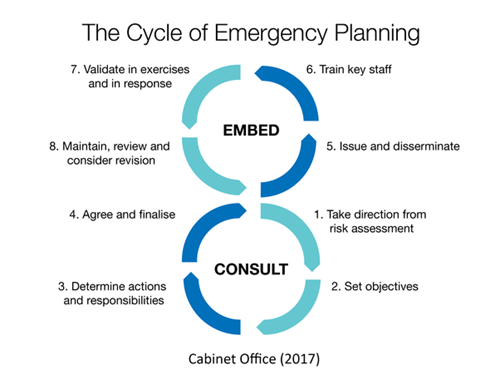
Emergency Planning Process
Emergency planning is a systematic and ongoing process, preparing organisations, such as district councils, for the response to, and recovery from, emergencies.
It is usual to view emergency planning as part of a cycle of activities. It starts with establishing a risk profile to determine what should be the priorities for developing plans, and ends with review and revision, which then restarts the whole cycle (see diagram). Plans will be amended as a result of new guidance, lessons learnt from exercises or emergencies, or a lowering of the risk for which they were developed.
More information about emergency planning can be found on the Cabinet Office's website.
How would you prepare for an emergency?
The Gov UK Be Prepared Campaign is encouraging people to think about what they would do if they and those around them were exposed to risks ranging from floods to fires to power cuts.